Door hardware rarely fails without warning. A loose lever, darkened finish, or uneven latch often reveals gradual damage. Understanding what factors affect door hardware durability helps facility teams prevent costly replacements and unexpected security concerns.
Lori Greene, AHC/CDC, an architectural hardware consultant and code expert, has stated, “Door hardware is a part of the door opening, not an isolated product.” Her point matters because hinges, closers, locks, frames, and users work as one system. A heavy door with weak hinges can sag within months. A closer adjusted too forcefully can damage the frame and shorten its own service life. Small mismatches create large problems.
This guide examines seven practical influences, including material quality, traffic volume, installation accuracy, maintenance, weather exposure, misuse, and hardware compatibility. Stainless steel may resist coastal moisture better than standard plated steel. A busy school entrance needs stronger cycle-rated components than a quiet office door. Even fingerprints, dust, and dried lubricant can change how a latch moves.
Real buildings are not controlled laboratories. Cleaning chemicals vary. Installers make mistakes. Users sometimes pull on doors instead of waiting for closers. That reality deserves attention. Product labels alone cannot predict service life. A premium lock can fail early when the door is misaligned. Conversely, modest hardware may last years under light, careful use.
The following tips connect visible symptoms with practical maintenance decisions. They also encourage a useful question: is the hardware failing, or is the opening asking too much of it?
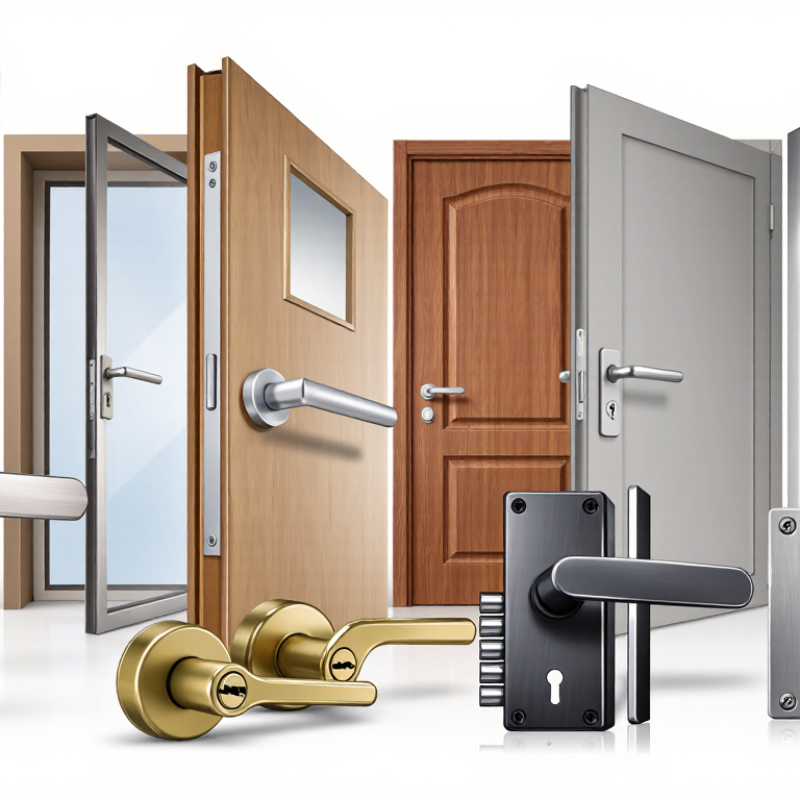
Material quality often determines how long door hardware performs under daily stress. In field inspections, I have seen handles loosen after months because their internal parts were poorly machined. A handle may look solid but still contain weak springs or thin mounting plates. Surface finish matters. Cheap plating can blister near damp entrances, exposing metal to moisture and air. That damage traps dirt and accelerates corrosion around screws and joints.
Stainless steel usually offers strong corrosion resistance, especially in humid corridors and coastal buildings. However, the alloy grade and manufacturing process still matter. Brass resists rust well, but soft brass can show dents around frequently used latch areas. For hinges, thick steel leaves and accurately formed pins reduce wear. Internal springs should also tolerate repeated compression without losing tension. Small parts matter.
A reliable assessment should examine the whole assembly, not only its visible finish. Check screw threads, bearing surfaces, spring movement, and the contact between the latch and strike plate. Ask for material specifications and test information when purchasing hardware. Generic terms such as “premium metal” provide little useful evidence. I once underestimated a handle because its surface looked flawless; its concealed spindle wore quickly during heavy use. That mistake changed how I inspect hardware. Cleaning chemicals can also damage finishes when applied too often or left wet. Even excellent material needs suitable installation, sensible maintenance, and a door frame that stays aligned.
Material Quality and Its Role in Door Hardware Lifespan
Representative ultimate tensile strength shows how material quality can influence resistance to mechanical stress. Stainless steel and steel generally provide strong load performance, while brass, aluminum, and zinc alloys can offer suitable durability when the alloy, finish, installation, and operating environment are properly matched. Corrosion exposure, usage frequency, maintenance, and manufacturing precision also have a major effect on service life.
Values are representative engineering figures for commonly used material grades; actual door hardware performance varies by alloy, heat treatment, product design, surface finish, and application.
Frequency of use is a primary durability factor in door hardware. Every opening creates friction, vibration, and load on hinges, latches, closers, and fasteners. ANSI/BHMA A156.4-2019 rates commercial door closers through cycle testing. Grade 1 units are tested to 2 million cycles, while Grade 2 and Grade 3 reach 1 million and 500,000 cycles. At 300 openings daily, one door can exceed 109,000 cycles annually.
Mechanical stress often increases faster than usage. A heavy door, strong wind, or repeated slamming transfers impact into the closer arm and hinge screws. Misalignment adds resistance, forcing users to pull harder. During site inspections, I have found loose fasteners under doors that appeared visually normal. That was a useful reminder: appearance is not performance. Cleaning debris, tightening screws, checking hinge wear, and adjusting closing speed can reduce unnecessary stress.
Locksets also face measurable fatigue. ANSI/BHMA A156.2-2011 lists cycle benchmarks of 800,000 cycles for Grade 1, 400,000 for Grade 2, and 250,000 for Grade 3 products. These figures are laboratory targets, not promises for every building. A busy entrance may need a higher grade, especially with carts, deliveries, or frequent shoulder impacts. Door alignment should be checked before replacing hardware. Otherwise, new components may inherit the same mechanical problem.
| Tip | Durability Factor | Typical Operating Condition | Mechanical Stress on Components | Potential Effect on Service Life | Practical Durability Measure |
|---|---|---|---|---|---|
| 1 | Daily Opening Frequency | Light-duty doors may experience fewer than 25 cycles per day, while busy commercial entrances can exceed 100 cycles per day. | Repeated rotation and return movement cause gradual wear at hinges, pivots, latches, springs, and spindle interfaces. | High impact | Select hardware with a tested cycle rating that exceeds the expected annual usage and establish a routine inspection schedule. |
| 2 | Door Weight and Size | Large, heavy, or glazed doors impose greater loads than standard lightweight interior doors. | Higher gravitational load increases hinge bearing pressure, fastener loading, frame deflection, and closer resistance. | High impact | Match hinges, pivots, closers, and fasteners to the actual door weight, width, height, and construction. |
| 3 | Slamming and Impact | Doors may be pushed, pulled, or allowed to close rapidly, especially in high-traffic areas or strong drafts. | Sudden impact transfers shock loads to latch bolts, strike plates, hinges, closer arms, mounting screws, and frame joints. | High impact | Use correctly adjusted door closers, door stops, reinforced strikes, and buffers where repeated impact is expected. |
| 4 | Latch and Lock Misalignment | The door, frame, or strike can shift because of settlement, loose fasteners, temperature changes, or hinge wear. | Users apply extra force to retract or engage the latch, increasing torque on cylinders, levers, escutcheons, and internal springs. | High impact | Check that the latch enters the strike without binding and correct alignment before replacing otherwise serviceable hardware. |
| 5 | User Force and Abuse | Lever handles may be used as supports, doors may be pulled by the handle, or hardware may be operated with excessive force. | Off-axis loading bends levers, loosens roses and trim, damages spindle connections, and can deform mounting points. | Medium to high impact | Choose robust mounting systems, provide suitable pull handles, and avoid using levers or panic devices as door stops. |
| 6 | Environmental Exposure | Humidity, salt air, cleaning chemicals, dust, and temperature variation affect hardware differently by location. | Corrosion increases friction and weakens surfaces; contaminants can restrict movement in locks, hinges, pivots, and closer mechanisms. | Medium to high impact | Specify suitable corrosion resistance, clean hardware with compatible products, and lubricate only where the manufacturer permits it. |
| 7 | Maintenance and Fastener Condition | Loose screws, dry bearings, worn washers, and damaged seals become more likely as cycle counts accumulate. | Reduced lubrication and loose connections create vibration, friction, uneven loading, and accelerated wear of moving components. | High impact | Inspect high-use doors at least quarterly, tighten approved fasteners, replace worn parts, and record recurring faults. |
| Reference note: Actual service life depends on door mass, construction, installation quality, environmental conditions, traffic patterns, and the hardware’s tested cycle rating. The operating conditions above are practical engineering ranges rather than a substitute for project-specific testing or applicable standards. | |||||
Humidity is one of the quietest threats to door hardware. Moist air settles inside hinges, latches, and fastener joints. When surfaces stay damp, oxidation develops beneath protective finishes. Coastal locations add airborne salt, which makes corrosion faster and more aggressive. Salt residue can remain after the door appears dry.
Temperature changes create another problem. Warm daytime air can produce condensation on cooler metal surfaces. Repeated expansion and contraction may loosen small fasteners over time. In cold regions, deicing salts can splash onto thresholds and lower hinges. Swimming pool chemicals, cleaning fumes, and industrial pollutants may also damage plated surfaces.
Dust and sand increase mechanical wear. They enter pivot points and act like fine abrasive powder. During maintenance inspections, technicians should check dark staining, rough movement, flaking finishes, and orange residue around screws. Rinsing salt deposits with clean water can help, but the hardware must be dried afterward. Use a lubricant suitable for the material and application. Harsh acidic cleaners often create more damage than they remove.
A maintenance schedule that looks adequate on paper can still fail in real weather. I have seen clean-looking handles corrode from the inside because water had nowhere to escape. That detail is easy to miss. Hardware near the floor deserves closer inspection, especially after storms or winter treatment. Dissimilar metals also require attention, since contact between them can accelerate galvanic corrosion. Small environmental clues often explain large failures.
Door hardware rarely fails without warning. Installation accuracy usually creates the first problem. A latch that misses the strike by only a few millimeters can scrape, bind, or require excessive force. Field technicians often find sagging hinges, uneven reveals, and closers mounted slightly off the manufacturer’s template. These small errors increase shock loads during every closing cycle. ANSI/BHMA A156.13 evaluates mortise locks through demanding cycle classifications, including millions of operations. Poor alignment can shorten real-world service life long before laboratory ratings are reached.
Alignment must be checked with the door fully closed, not held by hand. The latch should enter the strike cleanly, while the hinges remain firmly seated against the frame. A straightedge, feeler gauge, and repeated open-close test reveal problems that visual inspection misses. NFPA 80, 2022 edition, also emphasizes properly functioning self-closing and latching devices in protected openings. That requirement is practical, not merely administrative. A door that slams, rebounds, or fails to latch needs correction.
Fastener security matters just as much. Use the specified screw length, suitable pilot holes, and the manufacturer’s tightening requirements. Over-tightening can distort hinges or lock cases; under-tightening permits movement. Thread-locking compounds are not a substitute for correct fasteners. ANSI/BHMA A156.4 closer testing includes endurance classifications reaching two million cycles, but field conditions remain harsher than test rooms. Dust, vibration, and repeated impact expose weak installation quickly. I have seen “tight” screws loosen because the substrate was unsuitable. That detail deserves more attention.
Door hardware durability depends heavily on daily maintenance, not just material quality.
In field inspections, I often find that dust and loose screws cause early failures. Wipe handles, hinges, closers, and locks with a soft, dry cloth each month. Use a mild cleaner when fingerprints or grime build up. Avoid harsh chemicals. They can damage protective finishes.
Wipe handles, hinges, closers, and locks with a soft, dry cloth each month.
Check screws and mounting plates every three months. Tighten them carefully, but do not overtighten. A loose hinge can make the door sag and strain the latch. Apply a suitable lubricant to hinges and moving lock parts when operation feels rough. Keep lubricant away from electrical components and painted surfaces. Test the door closer after adjustment. It should close smoothly without slamming.
Small neglect becomes expensive.
Humidity, salt air, dust, and heavy traffic require more frequent checks.
Inspect seals and thresholds for swelling, cracking, or trapped debris. Confirm that the latch meets the strike plate evenly. Misalignment often sounds like a sharp click during closing. Record inspection dates and repeated defects; patterns reveal deeper installation problems.
A qualified technician should examine damaged closers, panic hardware, or fire-rated assemblies. Do not repair critical parts casually. I have seen maintenance plans fail because staff cleaned visible surfaces but ignored hidden fasteners. That mistake is easy to repeat, so review the checklist honestly.
Strong materials resist wear, moisture, and repeated impact. Poorly machined parts may loosen within months. Appearance can mislead.
Stainless steel generally performs well in humid corridors and coastal buildings. Brass resists rust, but softer grades dent more easily.
Check springs, screw threads, mounting plates, pins, spindles, and bearing surfaces. Small parts matter. Visible finish is not enough.
A latch missing the strike by a few millimeters can scrape or bind. Closing then requires extra force. That force increases wear.
Close the door fully during testing. Confirm smooth latch entry and firmly seated hinges. Use a straightedge, feeler gauge, and repeated cycles.
Use suitable screws, correct pilot holes, and careful tightening. Over-tightening can distort parts. Under-tightening allows movement.
Wipe handles, hinges, closers, and locks monthly with a soft, dry cloth. Check screws and mounting plates every three months.
Salt air, dust, and frequent use require more frequent inspections. Look for trapped debris, swelling, cracked seals, and sharp closing sounds.
Avoid harsh chemicals and leaving cleaner wet. Use suitable lubricant when movement feels rough. Keep it away from electrical and painted surfaces.
Stop casual repairs on damaged closers, emergency hardware, or fire-rated assemblies. Ask a qualified technician to inspect them. I once ignored hidden fasteners, and the problem returned.
Understanding what factors affect door hardware durability is essential for maintaining reliable performance over time. The quality of materials plays a major role, as strong, corrosion-resistant metals and well-made components generally withstand repeated use better than inferior alternatives. Usage frequency and mechanical stress also influence lifespan, especially when doors are opened and closed frequently or handled with excessive force. Environmental conditions, including humidity, temperature changes, dust, and exposure to moisture, can accelerate corrosion, deformation, and general wear.
Proper installation is equally important. Accurate alignment, secure fasteners, and correct adjustment help prevent unnecessary friction, looseness, and pressure on hinges, locks, handles, and other components. Regular maintenance can further preserve door hardware by keeping parts clean, checking for damage, tightening loose screws, and applying suitable lubrication when needed. By selecting durable materials, installing hardware carefully, considering the surrounding environment, and following a consistent maintenance routine, users can extend service life, improve safety and functionality, and reduce the need for frequent repairs or replacement.

MX Lock