Choosing the right hardware for various applications is critical. The distinction between residential and commercial use is significant. According to a report by the National Hardware Manufacturers Association, commercial projects often demand more robust and durable hardware than residential projects. This is due to heavier usage and stricter safety standards in commercial environments.
Understanding how to choose hardware for residential vs commercial use requires an analysis of specific needs. For instance, commercial settings frequently utilize high-volume access points. This translates to higher demands on hinges, locks, and door closers. Research indicates that neglecting these factors can result in malfunction or early failure.
It's essential to reflect on the long-term implications of hardware choices. A mistake in a commercial choice may disrupt business operations. In contrast, residential mistakes might only affect comfort and aesthetics. Evaluating the intended use and expected traffic helps make informed decisions. Sound judgment will enhance efficiency and promote safety in both settings.
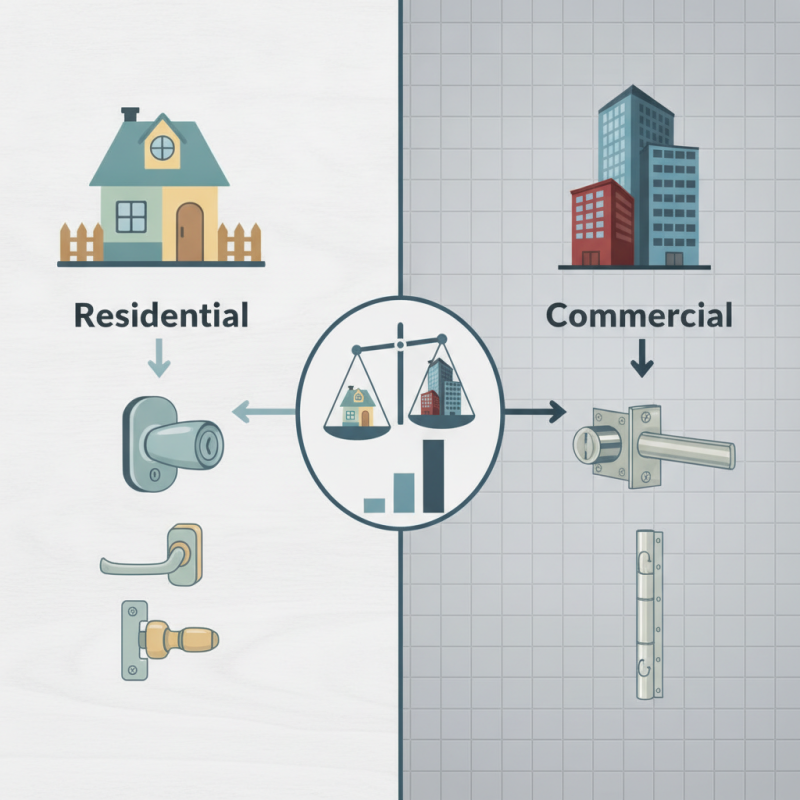
Understanding the Key Differences Between Residential and Commercial Hardware
When choosing hardware for residential versus commercial use, understanding key differences is crucial. Residential hardware is typically designed for lighter use. It often prioritizes aesthetics over heavy-duty functionality. Homeowners look for stylish options that fit their decor. In contrast, commercial hardware must withstand higher traffic and usage. It needs to be robust, durable, and often more utilitarian.
For instance, door locks in homes tend to be decorative but functional. They may offer basic security features. However, commercial locks require higher security standards. They must also comply with various building codes. The wear and tear on commercial hardware can be significant, indicating the need for regular maintenance. Residential hardware may not experience the same level of strain.
Installation differences are also notable. Residential installations are usually simpler and quicker. They may not require expert knowledge. Conversely, commercial installations might need professional oversight. They must consider safety regulations and code compliance. Reflecting on these factors can help ensure the hardware chosen meets specific needs effectively.
Evaluating Durability Requirements for Residential vs Commercial Applications
When evaluating durability requirements for residential versus commercial hardware, one must consider the distinct environments in which these products operate. Residential hardware often faces light use, while commercial settings endure high traffic. Daily wear and tear can significantly vary. For instance, a residential door handle will be exposed to fewer fluctuations in pressure compared to a commercial entryway, which needs to withstand constant usage.
Materials play a crucial role in determining durability. Metals like stainless steel are often favored in commercial applications for their strength and corrosion resistance. In contrast, residential options might utilize lighter materials, such as plastic or chrome, which are aesthetically pleasing but may not endure as long under stress. Users should reflect on their specific needs. Is the design worth the compromise on strength?
Another aspect to contemplate is maintenance. Residential hardware might require occasional lubrication, while commercial equipment often needs more extensive care due to the intense usage. The responsibility falls on the user to recognize that cutting corners on quality can lead to issues down the line. Have you considered the long-term implications of your choices? Making informed decisions early on can save costs and frustrations later.
Analyzing Cost-Effectiveness: Budget Considerations for Different Uses
When choosing hardware for residential versus commercial use, cost-effectiveness is key. Residential hardware often prioritizes comfort and aesthetics, while commercial choices emphasize durability and functionality. This distinction impacts budget considerations significantly.
In residential settings, many homeowners seek affordable options that blend style and utility. However, the long-term costs might increase due to frequent replacements or repairs. In contrast, commercial hardware generally has a higher initial cost. Yet, its robustness often leads to fewer maintenance needs over time, proving more cost-effective in the long run.
Budget constraints can lead to tough decisions. Choosing cheaper residential options to save upfront costs may backfire. Assessing the lifespan and warranty of hardware can provide clarity. Often, investing more initially can save money later. It’s essential to balance immediate budgetary needs with long-term value. Reflecting on usage patterns and potential wear can guide sustainable choices.
Assessing Regulatory Standards for Hardware in Residential and Commercial Spaces
When selecting hardware for residential or commercial spaces, understanding regulatory standards is crucial. Different settings have unique requirements. Residential spaces often prioritize safety and accessibility features. Regulations may vary by location, but they generally focus on residential building codes. Compliance ensures the hardware installed meets basic safety standards.
In contrast, commercial hardware must adhere to stricter codes. This includes fire safety regulations, accessibility for individuals with disabilities, and structural integrity. For example, door hardware in a commercial environment may need to handle higher traffic volumes. It’s important to verify these requirements with local authorities. Skipping this step can lead to costly renovations later.
Both types of hardware must be durable and reliable. However, the stakes are higher in commercial spaces. Using subpar hardware can result in fines or accidents. One must question: Are the selected standards adequate for the intended use? Regularly reviewing and updating knowledge about these standards can be beneficial. It ensures that project requirements are met efficiently.
Identifying the Importance of Scalability in Commercial Hardware Choices
When selecting hardware for commercial use, scalability is crucial.
Businesses grow, and their hardware needs can change rapidly. Choosing equipment that can expand and adapt is essential. This helps avoid frequent replacements.
For example, a small restaurant may start with basic point-of-sale systems.
As the business grows, it may need more advanced systems with greater capabilities.
In contrast, residential hardware usually involves more static choices. Home users typically do not need equipment that scales with rapid growth.
Reliability is key, but the focus is usually on personal preference rather than capacity. Businesses face unique challenges that require flexibility.
Choosing scalable hardware can feel daunting. It's easy to get overwhelmed by options. However, focusing on future needs can clarify the path forward. Analyzing the specific requirements of different industries is helpful. Regularly assessing these needs can lead to better equipment choices.
Still, many organizations struggle to predict future requirements accurately. Understanding these complexities allows for informed decisions.
FAQS
: Residential hardware focuses on comfort and aesthetics, while commercial hardware emphasizes durability and functionality.
Affordable options often lead to frequent replacements or repairs, increasing overall costs over time.
Choosing cheaper options may save money upfront but can lead to costly issues later.
Evaluating warranties and potential wear can inform better long-term investment decisions.
Compliance with local regulations ensures safety and functionality, reducing the risk of costly renovations.
It can lead to fines, safety hazards, and increased maintenance needs.
Verifying requirements with local authorities helps in meeting necessary building codes.
Commercial hardware must comply with fire safety, accessibility, and structural integrity standards.
Regular reviews keep knowledge updated and ensure project requirements are met effectively.
Thinking that low initial cost always translates to savings can be misleading and may require reevaluation.
Conclusion
When considering how to choose hardware for residential vs commercial use, several key factors must be evaluated. Understanding the fundamental differences between hardware designed for home settings and that intended for commercial environments is crucial. Residential hardware typically emphasizes aesthetics and user-friendliness, while commercial hardware prioritizes durability and functionality to withstand higher usage demands.
Furthermore, durability requirements vary significantly; commercial applications often necessitate hardware that meets rigorous standards. Cost-effectiveness also plays a vital role in decision-making, as budget considerations differ between residential and commercial projects. It is essential to assess regulatory standards that govern each type of space, ensuring compliance with necessary requirements. Lastly, scalability is an important aspect in commercial hardware choices, allowing for future growth and adaptability. By taking all these factors into account, one can make informed decisions regarding hardware selection for both residential and commercial needs.

 MX Lock