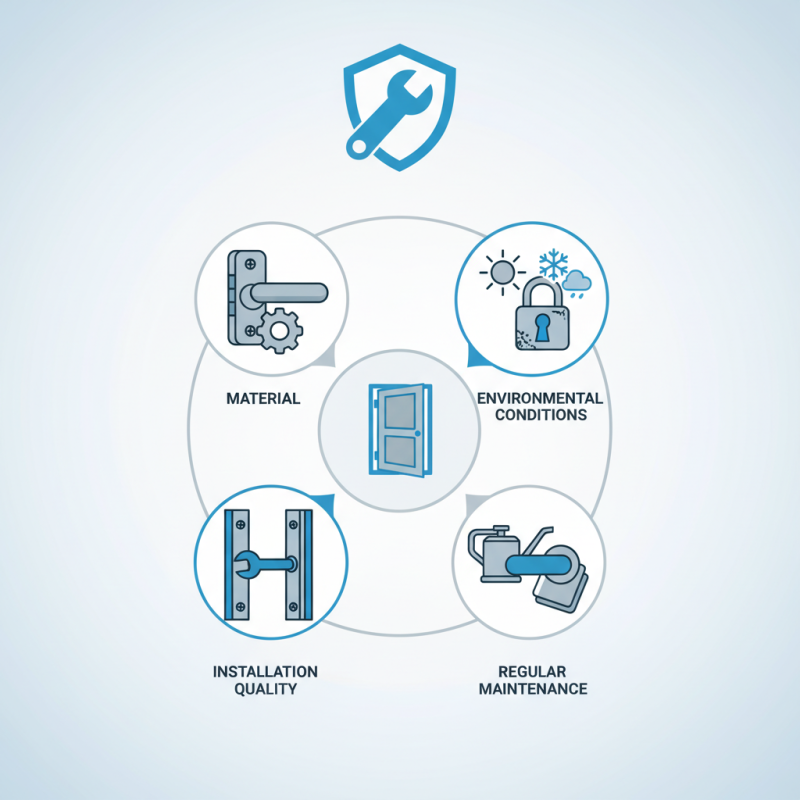
The durability of door hardware is essential for both safety and functionality. When considering what factors affect door hardware durability, various elements come into play. For example, the material of the hardware can significantly influence its lifespan. High-quality metals resist wear and tear better than cheaper alternatives.
Environmental conditions also matter. Areas with extreme temperatures or humidity can cause faster degradation. Regular maintenance can help prolong hardware life but is often overlooked. Consumers may not realize that simple actions, like lubricating locks, can enhance durability.
Installation quality is another critical factor. Improperly installed hardware can lead to early failure. It's crucial to understand these diverse factors to make informed choices. Ultimately, recognizing what factors affect door hardware durability can lead to better investments in security and functionality.
Material Composition of Door Hardware and Its Impact on Durability
The durability of door hardware heavily relies on its material composition. Different materials offer varying levels of strength, resistance, and longevity. For example, stainless steel is known for its resistance to corrosion, making it a popular choice for exterior doors. However, even stainless steel can suffer from wear and tear if not treated properly.
In contrast, brass is often chosen for its aesthetic appeal and antimicrobial properties. While it can be durable, brass isn't as resistant to physical damage. The choice of finish also impacts longevity. A high-quality finish can protect against scratches and wear, prolonging the hardware's life. However, some cheaper finishes may not hold up in harsh environments.
Quality matters immensely in door hardware. Often, lower-quality materials may seem attractive due to cost but can lead to frequent replacements. It's essential to weigh the initial savings against potential long-term expenses. Thoughtful material selection can lead to better performance and longevity, but it requires careful consideration and experience to choose correctly.
Factors Affecting the Durability of Door Hardware
This chart illustrates the durability scores of various materials commonly used in door hardware. Stainless steel ranks highest due to its resistance to corrosion and wear, while plastic materials are less durable compared to metals. Understanding these factors can help in selecting the right door hardware for specific applications.
Environmental Factors Influencing the Lifespan of Door Hardware
Environmental factors play a crucial role in determining the durability of door hardware. For starters, moisture exposure can lead to rust and corrosion, especially in metal components. Prolonged humidity or direct contact with water often shortens the lifespan of hinges, locks, and other parts. Homes near bodies of water or in humid climates may find their hardware deteriorating faster than expected.
Temperature variations also significantly impact door hardware. Extreme heat can warp wooden doors, affecting the alignment of locks and latches. Conversely, freezing temperatures may cause certain materials to become brittle. This can increase the likelihood of breakage during use. Attics or garages not climate-controlled are often ideal examples of this issue.
Airborne pollutants can further contribute to wear and tear. Dust, smoke, and smog can leave residues on hardware, leading to premature failure. Regular maintenance can mitigate some of these impacts, but not all conditions are preventable. Understanding these environmental challenges can help property owners make informed choices about their hardware selections and maintenance routines.
Maintenance Practices that Enhance the Longevity of Door Hardware
Regular maintenance is crucial for improving the longevity of door hardware.
Simple tasks can make a significant difference. For example, regularly checking and tightening screws ensures firm installation.
Loose screws can lead to misalignment, causing further damage over time. Small yet important, these steps can maintain
the function of door locks, knobs, and hinges.
Lubrication is another essential practice. It helps to keep moving parts functioning smoothly.
Use a silicone-based lubricant for best results. Over time, dirt and debris collect
on hardware, which can cause corrosion and wear. Cleaning these parts with a damp cloth is simple but often overlooked.
Neglecting this step may lead to premature hardware failure.
Finally, seasonal inspections should not be ignored. Temperature changes can affect hardware performance.
In winter, moisture can freeze, impacting door operation. Regular checks can identify issues before they escalate.
While these maintenance practices may seem trivial, neglecting them can lead to costly repairs or replacements.
Each step plays a role in the overall durability of door hardware. The key is consistency.
Design Features that Contribute to the Durability of Door Hardware
When considering the durability of door hardware, design features play a crucial role. One major aspect is the choice of materials.
High-quality metals like stainless steel resist corrosion better than lower-grade options.
A report from the Door Hardware Institute states that corrosion-resistant finishes can extend the lifespan of hardware by up to 30%.
This highlights the importance of material selection in manufacturing processes.
Another significant design factor is how components are engineered.
For instance, solid construction with fewer moving parts can enhance durability.
Products with robust hinges tend to withstand heavy use better than more delicate options.
According to a study by the American Architectural Manufacturers Association,
products designed with maintenance in mind can reduce the need for replacements by 40%.
However, not all designs are foolproof.
Aesthetic choices sometimes compromise functionality.
Some decorative hardware may not hold up under vigorous use.
It's essential to evaluate both beauty and strength.
Skilled builders need to balance these aspects to ensure longevity.
Prioritizing durability does not always mean sacrificing style, but difficult trade-offs can arise.
Installation Techniques and Their Role in Door Hardware Durability
The installation techniques used for door hardware significantly influence its durability. Proper alignment is crucial. If the hardware is misaligned, it can lead to premature wear and tear. This can cause doors not to close properly, creating gaps and weakening the overall structure. It’s vital to ensure that hinges are installed straight and at the correct height.
Tips: Always double-check measurements before installation. A small variance can lead to big problems later. Use a level to keep everything aligned. Remember, over-tightening screws can also strip the threads, leading to a weak hold.
Another factor is the choice of materials. High-quality metal and protective coatings enhance durability. However, the best hardware can fail if installed incorrectly. Even a sturdy lock becomes useless if it’s improperly fitted. Take your time and evaluate the door's frame and structure before installation.
Tips: Look for signs of wear in older doors. If you notice warping or damage, address these issues before adding new hardware. Consider the environment. Humid conditions can affect certain materials differently. Always choose hardware that suits your specific needs.
FAQS
: High-quality metals, especially stainless steel, resist corrosion better than lower-grade options.
Corrosion-resistant finishes can extend hardware lifespan by up to 30%.
Solid construction and fewer moving parts enhance overall durability significantly.
Misaligned hardware can cause premature wear, leading to structural issues and doors not closing properly.
Always double-check measurements and ensure that hinges are straight and at the correct height.
Yes, some decorative hardware may compromise durability under vigorous use, requiring careful selection.
Over-tightening can strip threads, leading to a weak hold and compromising the hardware's effectiveness.
Humid conditions can affect certain materials differently, which should influence your hardware choice.
Yes, look for signs of wear or warping and address these before installation for better results.
Balancing durability and aesthetic value is challenging but it's possible with careful design choices.
Conclusion
The durability of door hardware is influenced by various factors, including the material composition, environmental conditions, maintenance practices, design features, and installation techniques. Understanding what factors affect door hardware durability begins with recognizing that different materials may offer varying resistance to wear, corrosion, and environmental stressors. Additionally, external conditions such as humidity, temperature fluctuations, and exposure to elements can significantly impact the lifespan of these components.
Regular maintenance practices, such as lubrication and inspections, play a critical role in enhancing the longevity of door hardware by preventing wear and tear. Furthermore, thoughtfully designed hardware with robust features can provide added strength and resilience, while proper installation techniques ensure that the hardware functions correctly and maintains its integrity over time. Together, these considerations form a comprehensive approach to ensuring the durability of door hardware.

 MX Lock