How Do Door Closers Improve Fire Safety?

Time:2026-10-13 Author:Madeline
0%

A fire door can look strong, heavy, and properly installed, yet still fail when it matters. The door closer controls its movement, helping the leaf return to the frame after someone passes through. This simple action limits the spread of flames, smoke, and toxic gases between compartments. So, what is the role of door closers in fire safety? They help preserve the door’s protective function during an emergency, provided the entire assembly works correctly.

Lori Greene, an architectural hardware consultant and recognized fire-door expert, states, “A fire door that is propped open is not a fire door.” Her point is practical. A closer cannot protect a doorway if it is disconnected, poorly adjusted, or blocked by a wedge. In a real corridor, a loose closer may leave a visible gap near the latch. Smoke can pass through that gap quickly.

Reliable fire safety also depends on compatible hinges, latching hardware, seals, and regular inspections. A closer that slams the door may damage the frame or discourage daily use. One adjusted too lightly may not overcome carpet resistance or air pressure. Small failures matter.

This guide examines how door closers support fire-rated assemblies, what inspectors look for, and why maintenance records deserve attention. It also recognizes an uncomfortable limitation: a closer is not a complete fire-safety solution. Its value depends on installation quality, user behavior, and consistent testing. The hardware is modest. The responsibility is not.
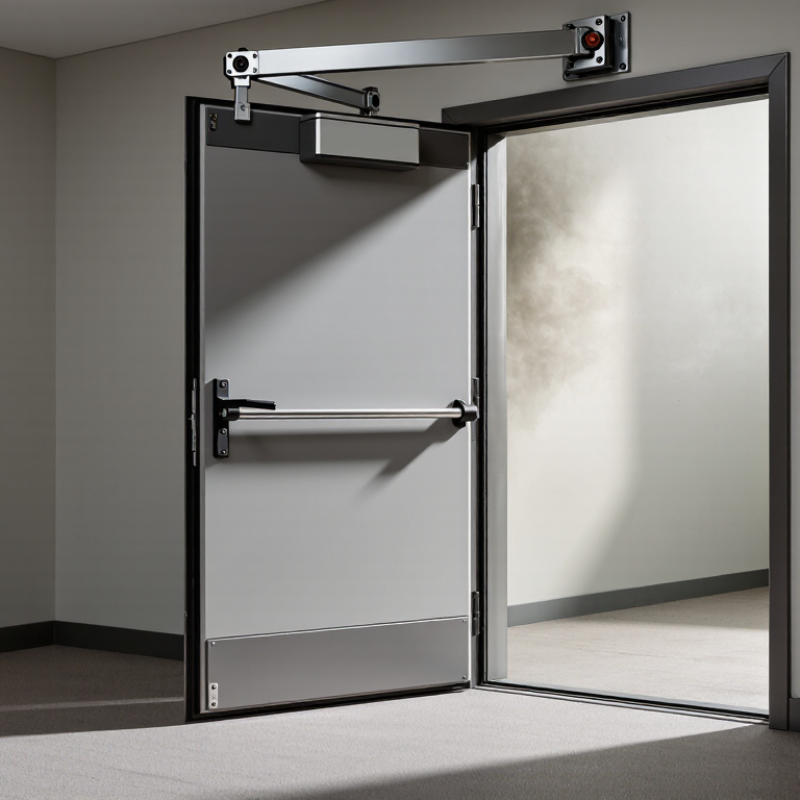
How Do Door Closers Improve Fire Safety?

What Are Door Closers and How Do They Work?

A door closer is a mechanical device that returns an open door to its closed position. It usually contains a spring and a hydraulic or pneumatic control chamber. When someone opens the door, the spring stores energy. The control fluid then regulates the closing movement.

The arm connects the closer body to the door frame. As the door moves, the arm turns an internal mechanism. Adjustable valves control closing speed and latching speed. This prevents the door from slamming or stopping before the latch engages. A controlled final movement is important for fire doors, because a small gap can allow smoke and heat to spread.

In practical inspections, technicians often check the closer, hinges, latch, and surrounding frame together. A damaged frame can defeat a well-adjusted closer. Excessive closing force may also make the door difficult to use, especially for children or people with limited strength. The opposite problem is common too: a weak setting leaves the door partly open. It is not perfect.

Fire safety depends on the complete door assembly and local building requirements. A closer should match the door’s size, weight, and use. Regular testing can reveal leaks, loose screws, unusual resistance, or delayed latching. Testing is often overlooked. That mistake can matter during an emergency. Door closers support passive fire protection, but they cannot replace certified fire doors, proper installation, or maintained escape routes.

How Do Door Closers Improve Fire Safety?

A door closer helps a fire door return to the closed position after people pass through. Keeping the door shut helps limit the movement of smoke, heat, and flames through openings. The chart shows common labeled fire-door assembly ratings in minutes. A door closer does not increase the door’s fire rating; the complete assembly must be properly listed, installed, and maintained according to applicable local requirements.

How Door Closers Limit the Spread of Fire and Smoke

A door closer is a quiet fire-safety control. It returns a fire door to its frame after someone passes. That action protects the compartment’s boundary. When the latch engages, smoke and hot gases face a slower route. NFPA 80 requires listed fire doors to be self-closing and self-latching in many protected openings. Requirements vary by occupancy and local code. A closer cannot compensate for a wedged door, damaged seal, or missing latch.

The timing matters during evacuation. NFPA reported 1,504,500 fires in the United States in 2022, with 3,790 civilian fire deaths. That report does not attribute deaths to door closers, but it shows why passive protection matters. Closed doors can reduce air movement and delay smoke migration. NIST compartment-fire studies also show that smoke can move rapidly through connected spaces. Field inspections often reveal small alignment defects that prevent complete closure. Small defects matter. This detail is easy to miss, and it deserves attention.

Tips: Test each closer monthly. Open the door halfway, then release it. It should close smoothly and latch without slamming. Keep corridors clear. Never prop a fire door open. Have qualified personnel inspect damaged hinges, seals, glazing, or hardware. Record defects and repairs. A simple log prevents repeated oversights, although it does not replace required inspections.

Key Fire Safety Features in Door Closer Design

A door closer improves fire safety by helping a fire door close automatically after someone passes through. This matters in busy corridors, stairwells, and apartment entrances, where doors are often left open. NFPA’s Home Structure Fires report, covering 2017–2021, recorded an annual average of about 360,000 home structure fires in the United States. These fires caused approximately 2,840 civilian deaths and 10,500 injuries each year. A closed door can slow heat, flames, and smoke, but only when the complete door assembly works correctly.

Key features begin with controlled closing speed and reliable latch action. The closer should move the door smoothly, then provide enough force for the latch to engage fully. Adjustable backcheck can reduce damage when wind or heavy traffic pushes the door open. In some facilities, electromagnetic hold-open devices keep doors open for accessibility, but they must release when the fire alarm activates. NFPA 80 requires fire doors and hardware to be inspected and maintained, not simply installed and forgotten. Small details matter: a loose closer arm, blocked doorway, or damaged seal can defeat the intended protection.

There is an uncomfortable limitation. A closer is not a fire barrier by itself. The frame, hinges, latch, glazing, seals, and wall must match the required tested rating. Maintenance staff should check closing movement, latch engagement, and visible damage during routine inspections. A door that closes slowly may feel convenient. During a fire, it may be dangerously late.

Where Fire-Rated Door Closers Are Used

Fire-rated door closers are used wherever a door must protect a fire or smoke compartment. Common locations include stairwells, hospital corridors, hotel rooms, apartment entrances, schools, and industrial buildings. They help the door return to its frame after people pass through. The latch then supports the tested fire-door assembly.

According to the NFPA report Fire Loss in the United States During 2023, U.S. fire departments responded to an estimated 1,388,500 fires. These incidents caused approximately 3,670 civilian deaths and 13,250 injuries. In healthcare facilities, NFPA recorded an annual average of about 6,700 structure fires from 2016 to 2020. This makes reliable door closure especially important near patient rooms, service corridors, and protected escape routes.

A closer is not magic. Its protection depends on correct installation, compatible hardware, and regular inspection. The door should close from a fully open position and latch without excessive force. Staff should also check for wedges, damaged hinges, loose screws, or blocked frames. Door closers belong on listed fire-door assemblies and must follow the applicable installation requirements, such as NFPA 80. Real buildings are messy. Air pressure, heavy traffic, and poor adjustments can prevent full closure. That gap is easy to miss, yet it may allow smoke to spread before occupants reach safety.

How to Install and Maintain Door Closers for Fire Safety

Fire doors protect escape routes only when they close fully after people pass through. A door closer controls that movement and helps limit smoke and flames. NFPA’s Fire Loss in the United States During 2022 reported about 1.5 million fires and 3,790 civilian fire deaths. That figure does not prove that closers prevent every fatality. It does show why small hardware failures deserve attention.

Before installation, verify the fire-door label, frame condition, hinge alignment, and closer rating. Follow the manufacturer’s template precisely. Use approved fasteners and avoid drilling into hidden wiring or weak frame sections. Set the closer so the door closes from a wide opening without slamming. Check that the latch engages completely. Never use wedges or objects to hold the door open. NFPA 80 requires fire doors to be self-closing and self-latching, with periodic inspection requirements.

Maintenance needs practical discipline. Inspect visible screws, arms, seals, hinges, and floor clearances regularly. Test the door during normal traffic conditions, not only in an empty hallway. A warped door can overload a correctly adjusted closer. That is easy to miss. NFPA 80 calls for documented inspections at least annually by a qualified person, subject to local requirements. Record failed tests, repairs, and dates. Do not disable the closer to make movement easier. The uncomfortable point is simple: a door may look acceptable while failing to latch during a real emergency. Recheck after renovations, repainting, or hardware changes.

How Do Door Closers Improve Fire Safety? - How to Install and Maintain Door Closers for Fire Safety

Safety or Maintenance Dimension Recommended Practice Why It Matters for Fire Safety Verification Point
Self-closing function Install and adjust the closer so the door closes fully from an open position without manual assistance. A closed fire door helps limit the movement of flames, hot gases, and smoke through an opening. Open the door and release it. Confirm that the latch engages and the door is not left partially open.
Compatible hardware Use a listed or approved closer that is suitable for the fire-door assembly, door size, weight, frame, and mounting arrangement. Fire-rated doors and hardware are evaluated as assemblies; unsuitable hardware can compromise their performance. Check the door and hardware labels, installation instructions, and applicable local requirements before installation.
Installation position Use the approved template to mark mounting holes, keep the closer securely fastened, and avoid drilling or modifying the assembly beyond approved instructions. Correct mounting supports reliable closing and helps preserve the fire-door assembly’s tested configuration. Confirm that screws are tight, the closer body is aligned, and the arm does not contact the frame or adjacent hardware.
Closing speed Adjust the closing-speed valve gradually, following the closer instructions. The door should close smoothly without slamming or stopping before the latch engages. A controlled closing action reduces damage and helps ensure the fire door remains closed during an emergency. Test the door several times from different opening angles and confirm consistent operation.
Latching Ensure the latch, strike, seals, and frame are correctly aligned and free from obstruction. A door that closes but does not latch may not provide the intended fire and smoke barrier. Visually inspect the latch and perform a functional test with the door closed.
Smoke and intumescent seals Keep seals continuous, securely attached, and free from paint, dirt, cuts, or unauthorized removal. Damaged or missing seals can increase the passage of smoke and hot gases around the door edges. Inspect the head, jambs, and meeting edges for gaps, damage, or missing sections.
Obstructions and wedges Do not wedge, tie, prop, or otherwise hold a fire door open unless an approved release system is provided and permitted by the applicable requirements. An open fire door cannot perform its intended role as a compartmentation barrier. Check the floor, wall, and door area for wedges, bins, furniture, cables, or other objects blocking closure.
Routine visual inspection Inspect the closer body, arm, fasteners, door leaf, frame, hinges, latch, and seals on a routine basis according to the building’s fire-safety program. Early detection of loose, damaged, or missing components reduces the risk of failure during a fire. Record defects and arrange corrective work promptly rather than waiting for the next scheduled inspection.
Functional inspection frequency Complete inspections at the frequency required by local codes and the building’s safety policy. In many jurisdictions, fire-door assemblies are inspected at least annually. Regular testing confirms that the complete assembly, including the closer, remains operational. Document the inspection date, door location, defects found, corrective action, and inspector.
Lubrication and adjustment Lubricate only components and locations permitted by the closer instructions. Do not open or tamper with the hydraulic mechanism. Incorrect lubricants or unauthorized adjustment can cause leakage, inconsistent closing, or permanent damage. Look for oil leakage, unusual resistance, loose arms, or inconsistent closing and refer major defects to a qualified technician.
Accessibility and user safety Balance reliable closing with safe, usable opening force and controlled movement, while complying with applicable accessibility requirements. A closer that is excessively stiff or fast may encourage users to disable it or damage the door. Check operation under normal conditions and obtain a qualified assessment when access or egress requirements apply.
Repair or replacement Replace closers that leak, fail to close or latch the door, have damaged arms, or cannot be adjusted to operate correctly. A defective closer can leave a fire door open or prevent the assembly from functioning as designed. Use compatible replacement hardware and re-test the complete door assembly after the work is finished.
Emergency preparedness Keep fire doors identifiable, unobstructed, and included in staff fire-safety training and evacuation checks. Staff awareness helps prevent intentional disabling of closers and supports proper compartmentation during an emergency. Include door-closer checks in fire drills, safety rounds, and documented facility inspections.

FAQS

What is a door closer?

A door closer is a mechanical device that returns an open door to its frame. It uses a spring and controlled fluid movement.

How does a door closer control movement?

Opening the door stores energy in its spring. An internal arm turns the mechanism. Adjustable valves control closing and latching speeds.

Why are door closers important for fire safety?

They help fire doors close and latch after people pass through. A small gap may allow smoke and heat to spread.

Where are fire-rated door closers commonly used?

They are common in stairwells, hospitals, hotels, schools, apartments, and industrial buildings. Protected escape routes need reliable closure.

How can someone check whether a closer works properly?

Open the door widely, then release it. It should close smoothly and latch completely. Test it during normal building traffic.

What problems can prevent full door closure?

Loose screws, damaged hinges, warped doors, air pressure, and blocked frames can interfere. A clean-looking door can still fail.

How should a door closer be installed?

Check the door label, frame, hinges, and closer rating first. Follow the installation template and use approved fasteners.

How often should fire-door closers be inspected?

Inspections should be documented at least annually by a qualified person, subject to local requirements. Recheck after repairs or renovations.

Should a closer be disabled if the door feels difficult to open?

No. Excessive force may indicate poor adjustment or another door problem. Fix the cause instead. Easier is not always safer.

Conclusion

Door closers are mechanical devices that automatically return a door to its closed position after it has been opened. By controlling the closing speed and force, they help ensure that fire-rated doors shut securely and remain effective as part of a building’s fire protection system. What is the role of door closers in fire safety? Their primary role is to limit the movement of fire and smoke between rooms, corridors, and escape routes, giving occupants more time to evacuate and helping emergency responders work safely.

Fire-rated door closers are designed with features such as controlled closing, adjustable latching power, and reliable performance under high temperatures. They are commonly used in stairwells, hallways, commercial buildings, public facilities, and other areas where fire doors are required. Correct installation is essential so the door closes fully without excessive force or obstruction. Regular inspections should check for loose fittings, damage, leaks, unusual resistance, and proper latching. Routine maintenance keeps the closer dependable and supports the overall performance of the fire door system.

Madeline

Madeline

Madeline is a dedicated marketing professional with a wealth of expertise in our company's core offerings. With a keen understanding of the industry, she brings a unique perspective to her role, consistently delivering high-quality content that highlights the superior aspects of our products. As......