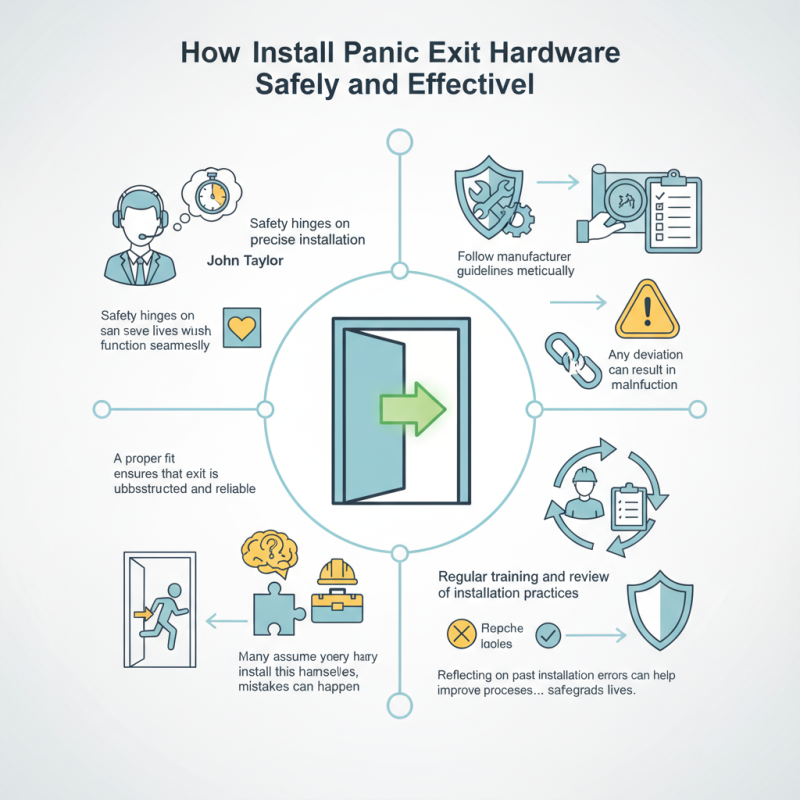
Installing panic exit hardware is crucial for ensuring safety in emergency situations. John Taylor, a renowned expert in safety compliance, emphasizes, "Proper installation can save lives when every second counts." Understanding how to install panic exit hardware safely is essential for businesses, schools, and public venues.
Safety hinges on precise installation. Each piece of hardware must function seamlessly to provide quick exits during emergencies. It’s vital to follow manufacturer guidelines meticulously. Any deviation can result in malfunction, posing risks to occupants. A proper fit ensures that the exit is unobstructed and reliable when needed most.
While many assume they can install this hardware themselves, mistakes can happen. Overlooking small details like alignment can lead to serious consequences. Regular training and review of installation practices should be standard. Ensuring personnel understand their roles is key. Reflecting on past installation errors can help improve processes. This proactive attitude towards installation safeguards lives when panic strikes.
Panic exit hardware plays a crucial role in emergency safety. It allows quick and easy exit from buildings, especially during crises. Businesses and institutions require this equipment for compliance with safety regulations. Understanding how these devices function is essential to maximizing their effectiveness.
Effective panic exit hardware features a push bar mechanism. When activated, it unlocks the door instantly. This design ensures rapid evacuation. However, installation must adhere strictly to safety standards. Poor installation can lead to malfunction during emergencies. Regular maintenance checks are critical to ensure reliability.
The importance of panic exit hardware cannot be overstated. In emergencies, every second counts. Proper education about these systems often gets overlooked. Staff training is vital for utilizing equipment efficiently. Reflecting on past incidents highlights areas for improvement. Continuous learning in safety practices reinforces preparedness.
When planning to install panic exit hardware, having the right tools and materials is essential. Accurate measurement tools, such as a tape measure and level, ensure proper alignment. A drill is necessary for creating holes in the door and frame. Fasteners like screws and anchors provide dependable support, while a chisel can help with adjustments. According to reports, proper installation contributes to 30% higher compliance with safety regulations in commercial buildings.
Selecting the right materials is equally crucial. Heavy-duty exit devices often require specific hardware for mounting. A robust hinge guarantees the door swings smoothly. Additionally, a durable finish can resist wear over time. Research indicates that over 40% of safety issues arise from improper installation techniques or subpar materials. This underscores the need for quality and precision throughout the process.
While planning, it's important to reflect on past installations. Were the tools used adequate? Did the materials meet expected standards? Poor experiences can yield valuable lessons for future projects. Utilizing industry best practices can significantly enhance both the safety and durability of panic exit hardware installation.
Installing panic exit hardware is crucial for safety. It allows for quick exits during emergencies. Here’s a guide to help you through the process.
Begin by collecting necessary tools. You will need a drill, screws, and a measuring tape. Ensure you choose a location that is easily accessible. Measure the height of the door frame, keeping in mind the ADA guidelines. Mark the spots for mounting the hardware. Precision matters here. Drill pilot holes where you marked.
Next, install the panic bar. Align it with the marks you made on the door. Secure it using screws, making sure it is tightly fixed. Test the mechanism to ensure it functions smoothly. Sometimes, alignment issues can arise, so take your time to adjust if necessary.
Finally, educate staff on how to use the panic hardware. Conduct drills to familiarize everyone with the process. Continuous checks and maintenance are essential for effectiveness. Installation is important, but consistent testing and feedback ensure safety. The process may have hiccups, but improvement comes with practice.
When installing panic exit hardware, safety must be the top priority. According to the National Fire Protection Association, injuries during installation can lead to significant delays in safety compliance. Ensuring that all participants understand the installation process minimizes risk. It’s vital to have a clear plan and to communicate effectively with your team.
**Tip:** Always conduct a pre-installation safety briefing. This fosters awareness of potential hazards.
Proper protective gear is essential during installation. Hard hats, gloves, and eye protection can prevent common injuries. A study by OSHA shows that 40% of workplace injuries occur without proper safety equipment. Skipping these can result in costly accidents. Ensuring a designated area for installation also contributes to safety. This reduces distractions and increases focus.
**Tip:** Use clear signage around the installation area to alert others.
Before starting the installation, conduct a site assessment. This can reveal unforeseen hazards. Incomplete assessments might lead to serious complications later. Understanding your environment enhances safety during the process. With attention to these details, the installation can proceed smoothly and effectively.
Testing and maintaining installed panic exit hardware is crucial for safety and functionality. Regular checks ensure that the exit hardware operates seamlessly during emergencies. Start by inspecting the exit devices for any visible wear or damage. Hinges and mounting brackets should be secured and free from rust.
It's essential to conduct functional tests. This involves pushing the panic bar to ensure it releases the door correctly. If the exit does not function normally, it's a red flag. Regular testing can prevent accidents during real emergencies.
**Tips:** Schedule monthly inspections for routine checks. Document findings and actions taken. Use a checklist to ensure consistency.
Involving trained personnel in the maintenance process can raise awareness. They can spot potential issues early. It's easy to overlook minor details, but they can lead to significant problems later on. Always prioritize clear communication when discussing issues with your team.
| Dimension | Details |
|---|---|
| Installation Steps | Prepare tools, install hardware according to manufacturer's guidelines, ensure proper alignment and secure fastening. |
| Safety Precautions | Use personal protective equipment, ensure power sources are off, follow safety codes and regulations. |
| Testing Schedule | Monthly checks for functionality, annual full system testing. |
| Maintenance Tips | Regular cleaning of components, tightness checks, immediate repairs for any faults. |
| Common Issues | Sticking mechanisms, misalignment, failure to operate under stress. |
: Panic exit hardware helps people exit buildings quickly during emergencies. It's essential for safety.
Proper installation ensures compliance with safety regulations. It helps save lives during critical situations.
You will need a tape measure, drill, fasteners, and a chisel for proper installation.
Conduct a pre-installation safety briefing and wear protective gear like hard hats and gloves.
Improper installation can cause malfunctions during emergencies. This increases risks to safety.
Consider past tool effectiveness and material quality. Learn from previous experiences for better results.
Regular maintenance checks are vital to ensure reliability and the effectiveness of panic exit hardware.
Incomplete site assessments might miss hazards. This can lead to complications during the installation process.
Proper education and training prepare staff to use panic exit hardware effectively in emergencies.
Designate a specific area for installation and use clear signs to alert others about the work being done.
Panic exit hardware is a critical safety feature that facilitates quick evacuation during emergencies, making its proper installation essential. Understanding its components and significance is the first step in learning how to install panic exit hardware safely. The installation process requires specific tools and materials, which should be gathered beforehand to ensure a smooth procedure. A step-by-step guide outlines the installation process, emphasizing the importance of precision and adherence to safety protocols.
Safety considerations are paramount during installation to avoid accidents or malfunctions in emergency situations. After installation, it is crucial to test and maintain the panic exit hardware regularly, ensuring it remains functional and reliable. With the right approach and awareness, anyone can successfully learn how to install panic exit hardware safely and effectively, contributing to a safer environment for all occupants.

MX Lock