High-durability safety hardware customized to secure vital emergency corridors in South Pacific institutional environments.
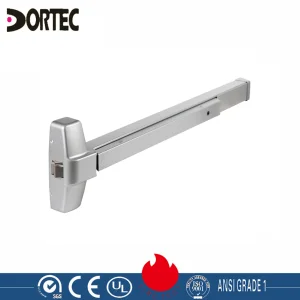
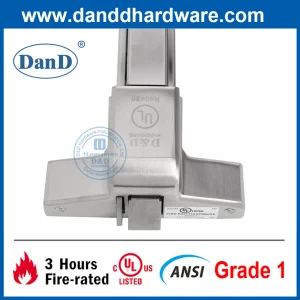
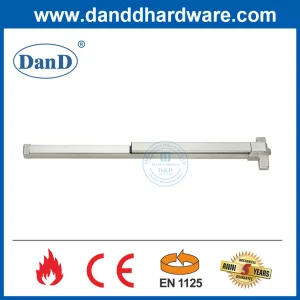
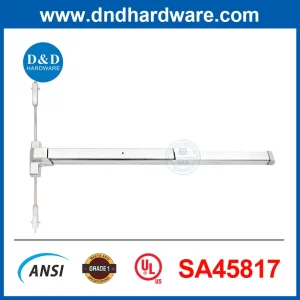
Kiribati's location in the central Pacific Ocean subjects its physical infrastructure to some of the most aggressive environmental challenges on earth. Atmospheric salinity, extreme humidity, high daily temperatures, and localized exposure to tropical storms mean that conventional ironmongery and carbon steel hardware will degrade rapidly. In commercial buildings, public offices, healthcare centers, and educational zones in Tarawa, Betio, and Christmas Island, selecting substandard hardware is not simply a maintenance issue—it is a critical public safety hazard.
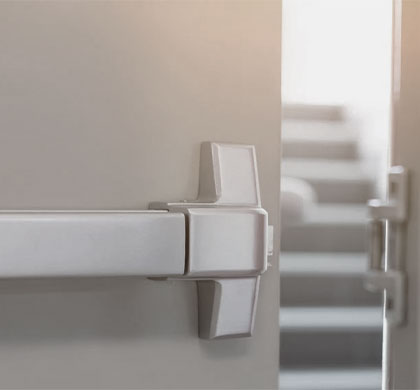
When selecting emergency exit panic bars, the primary parameters must focus on severe corrosion resistance. For emergency egress pathways, structural integrity must remain intact for decades without mechanical failure. Commercial projects in Kiribati require certified Stainless Steel (Grade 304 or 316) hardware to guarantee resistance to pitting and structural decay. Moreover, because replacement logistics take weeks or months to reach remote Pacific islands, selecting high-quality products from an established OEM/ODM exporter is crucial to project schedules and cost control.
Understanding standard pathways ensures project signs-offs are swift, reducing inspection failures and liabilities.
In Kiribati, project developers and consulting engineers lean heavily on international standardizations due to the dual influence of Australian/New Zealand building codes and historical standard frameworks. To guarantee life safety during structural fire emergencies or high-occupancy evacuations, emergency hardware must possess clear testing accreditation from internationally recognized laboratories such as Underwriters Laboratories (UL) or European standard marks (CE).
| Standard Certification | Primary Jurisdiction Influence | Test Parameters & Core Requirements | Applicable Kiribati Scenarios |
|---|---|---|---|
| UL 305 / ANSI A156.3 Grade 1 | US, Pacific Territories, International Funding Projects | 500,000 mechanical cycles, horizontal force pressure test, latch bolt projection criteria. | High-capacity government buildings, educational institutions, regional airport terminals. |
| EN 1125:2008 | Europe, Commonwealth standard frameworks, ANZ adaptions | Strict panic exit device standards. Requires panic bar action to open under 220 lbs load in simulated crush environments. | Eco-tourism resorts, coastal retail developments, community halls, emergency shelters. |
| EN 1634-1 / UL 10C | Global Fire Door Compliance | Fire integrity evaluation of hardware assemblies when subjected to temperatures exceeding 1000°C for up to 3 hours. | Server rooms, electrical substations, fuel storage containment spaces, and hotel corridors. |
| ADA (Americans with Disabilities Act) | US Standards, Aid-funded construction | Requires panic bar force to activate to be 15 lbs or less, allowing escape for individuals with limited hand control. | Medical clinics, hospitals, and primary schools across the Gilbert and Line Islands. |
A premier Chinese manufacturing force delivering world-class architectural hardware directly to the Pacific.
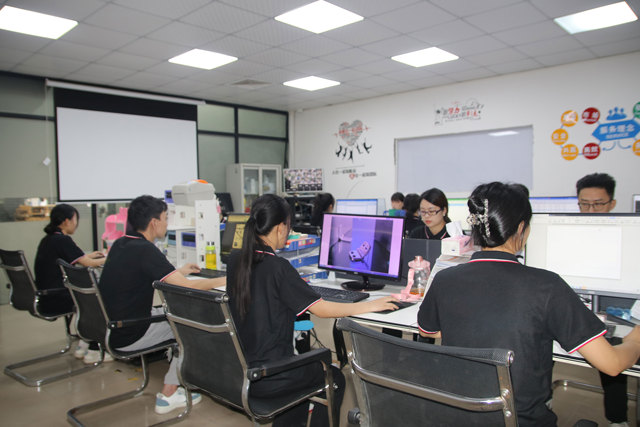
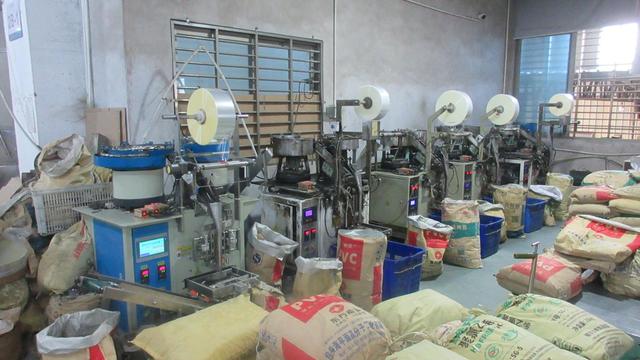
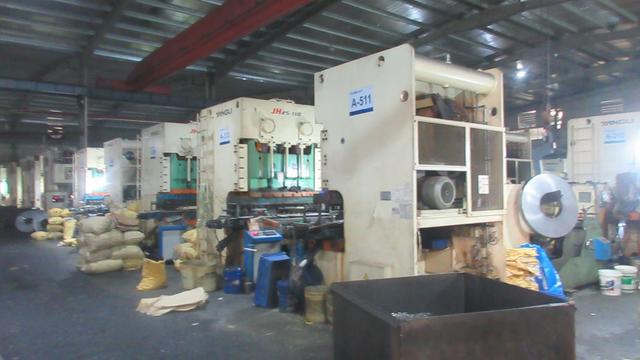
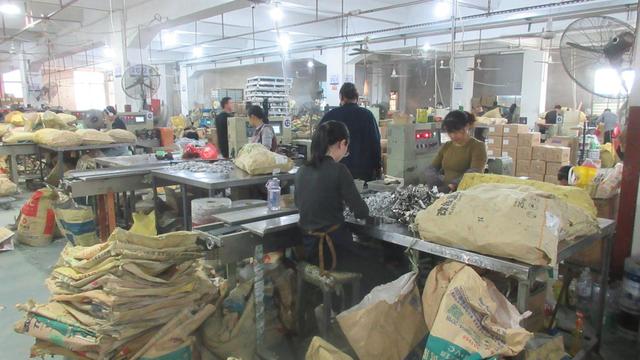
Dongguan MX Lock Co., Ltd. has over 17 years of experience in manufacturing and supplying architectural hardware products for metal doors, wooden doors, and fire doors in China. Our product range includes door hinges, door locks, door handles, door closers, panic exit devices, door stoppers, door bolts, and a full range of door accessories, providing complete door opening and access solutions.
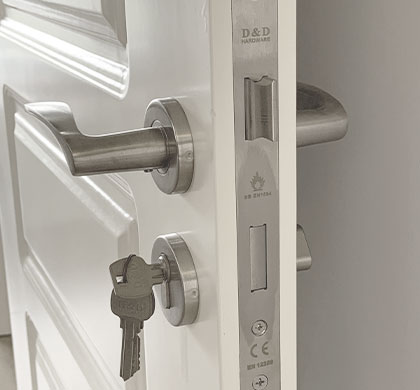
All products are designed and tested to meet stringent international standards, including European Standards (BS EN), American Standards (ANSI), CE, and BHMA certifications. Our hardware solutions are widely used in education, healthcare, hotels, government facilities, apartment buildings, and various commercial applications, ensuring safety, durability, and reliable performance.
Dongguan MX Lock Co., Ltd. has established long-term partnerships with customers across Europe, the Middle East, America, and Asia. We are recognized for our strong product certification, professional expertise, strict quality assurance, competitive pricing, customization capabilities, and responsive customer service.
With extensive industry knowledge and a highly qualified team, we are committed to understanding technical requirements and delivering tailored solutions that best meet our clients’ needs. Our goal is to build long-term, mutually beneficial partnerships and continue providing high-quality door hardware solutions worldwide.

Why architectural firms and building supply distributors in Kiribati partner directly with MX Lock.
For installations in seaside environments like South Tarawa, we offer customized surface passivation. By treating SS304 and SS316 with special chemical coatings, our hardware repels salty ocean moisture, ensuring the emergency mechanism functions smoothly without seizing or binding over time.
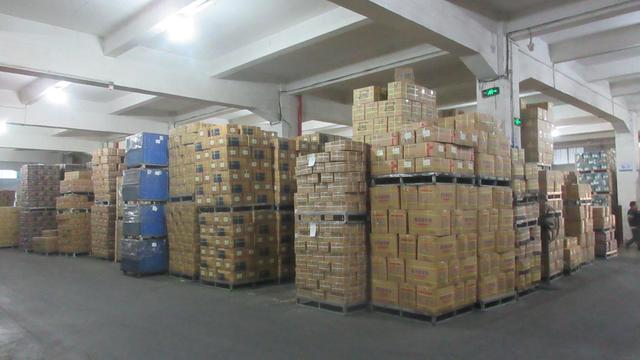
We routinely manage export packaging protocols for the Pacific Islands. Our export packaging features double-corrugated outer boxes, internal moisture barrier plastic wraps, and heavy desiccant packs to prevent high humidity corrosion during ocean transit via transit hubs like Fiji or Australia.
We supply clear, highly detailed paper drilling templates, installation manuals, and technical drawings. This simplifies on-site installation, reducing errors when working with local contractors in Kiribati where skilled labor and tools might be limited.
Cut out regional distributor markups. By purchasing directly from our manufacturing facility in Dongguan, Kiribati government agencies, hoteliers, and developers can reduce hardware procurement costs by up to 35% while keeping high certification standards.
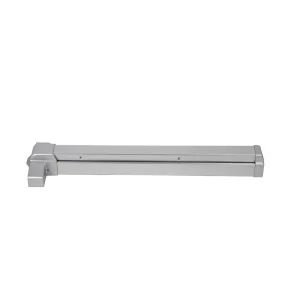
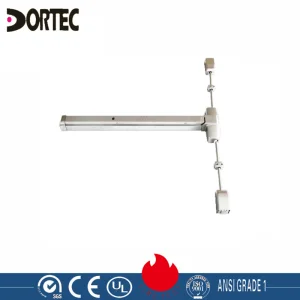
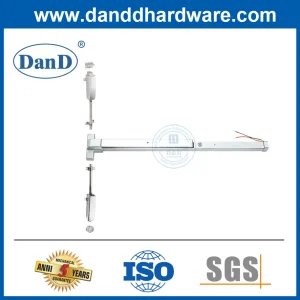
Discover our full line of UL-listed and CE-certified panic exit systems, vertical rods, and trim options.
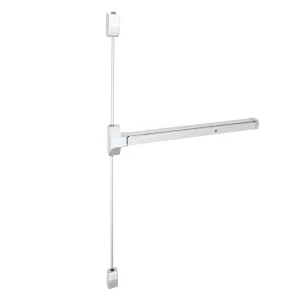
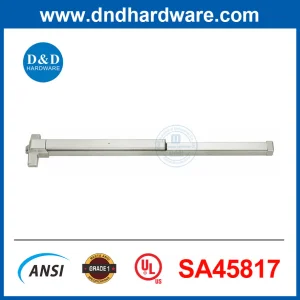
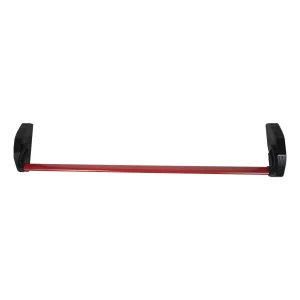
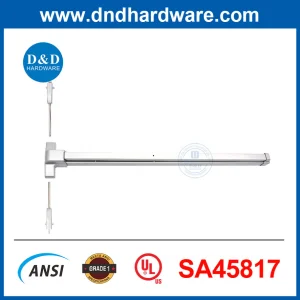
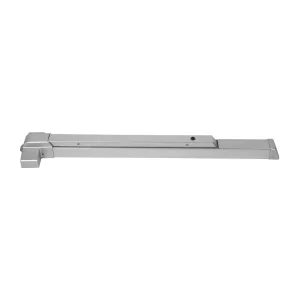
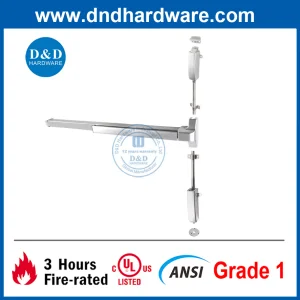
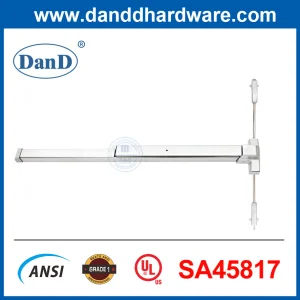
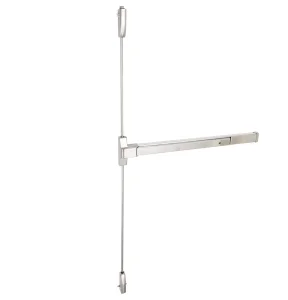
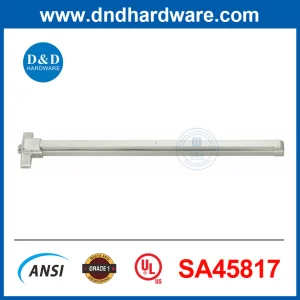
Technical advice for contractors, architects, and importers operating in the South Pacific.
For seaside environments, Grade 304 or 316 Stainless Steel is highly recommended. These alloys feature chromium and nickel concentrations that prevent surface rusting and pitting. Zinc alloys and standard carbon steel should be avoided, as ocean air will degrade them within months.
UL 305 is the North American standard emphasizing mechanical cycle lifetime (500k+ cycles) and fire latch integrity. EN 1125 is the European standard focusing on panic release functionality under high crush pressure conditions. We manufacture and supply panic bars conforming to both pathways to match your project specifications.
Yes. Double doors require a combination of a vertical rod device on the passive leaf and a rim type panic device on the active leaf. Alternatively, double vertical rod panic exit devices can be fitted on both doors to enable independent exit operation.
Transit times vary based on ocean freight schedules. Typically, shipping containers routed from Guangzhou or Shenzhen ports to Betio Port in Tarawa take between 4 to 6 weeks, depending on connection loops in Fiji, Brisbane, or Auckland. We manage all export packing and paperwork to minimize delays.
Yes, our panic devices are certified for installation on fire doors. They undergo testing to EN 1634-1 or UL 10C standards, providing fire resistance ranging from 1 to 3 hours, depending on the model and system configuration.
Yes. As a factory manufacturer, we support adjustments to crossbar lengths and custom mounting trims. This allows new panic hardware to align with existing prep cutouts, which is ideal for retrofitting older public buildings in Kiribati.
Get in touch with MX Lock for a custom product quote, complete specification sheets, and competitive direct-to-port shipping rates.
Send Inquiry Now MX Lock